

Lucy Brown, Features Writer
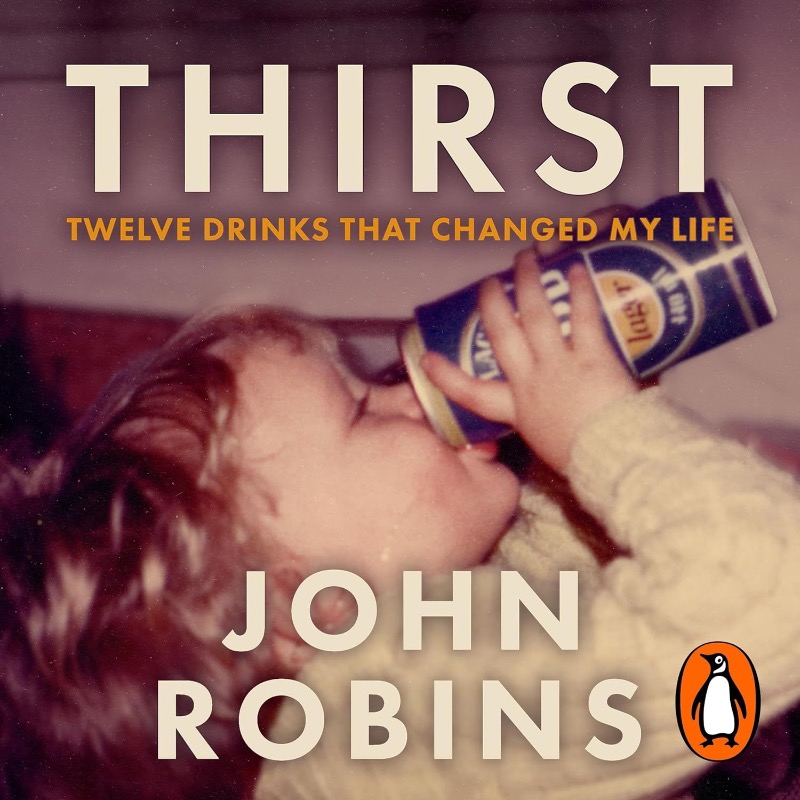
Thirst By John Robins
Being the go-to for matters of addiction, abuse, and homelessness (I'm quite the library), I furnished her with a few, assuming that the reason I'd hung on to them was they were the best of the crop.
Time passed. The two of us began a reading group which in turn prompted the following outburst from her – for me at once searingly accurate, a touch sad and absolutely hilarious.
“I read all these books," she began (with more than a hint of anger in her voice). “And I’m thinking – 'You drink, you blackout, you say you won't do it again. Then you go out, you drink, you blackout and you do it again’, and I’m going, "Well, why don't you just stop going out?”
I didn’t own, nor had I heard of Thirst at this point, nor perhaps more unusually its author, John Robins.
My son gave me the book which I was touched by. He was keen to make it clear that he’d bought it for me, not because it was about alcoholism, but because he liked the author – he was funny and intelligent, and he thought I'd like him. I did think perhaps that wasn’t entirely the case, but that isn’t important - all his observations turned out to be true.
I’m fairly certain I’ll have been in the minority of not having heard of John Robins – comedian, presenter, writer - when I read this book, and that puts me in a relatively unusual position of being able to judge its contribution to addiction literature alongside its entertainment value without any preconceived ideas. It also helps my own personal mission of trying to find a book that genuinely crosses over, one that is essentially a good read for those looking to identify with the subject matter and those who just want the good read.
Thirst works. Told via the construct of twelve drinks that changed his life, Robins hangs each chapter on a drink, an era of his life and his observations of himself at that time. He doesn’t go hugely into the science of alcoholism, though the book is peppered with some astounding facts largely regarding the danger of alcohol, but more he observes who he was at the time of that drink. He doesn’t blame, nor does he use the book to really find an answer for his condition – (perhaps like me, he doesn’t really believe there is a definitive one). Instead, he tells of how his life was then. There is some questioning but not overseeking of answers or explanation, and though there is some nostalgia and romance attached to some of his drunken exploits, equally there is anxiety and fear and isolation. His accounts of drinking experiences, blackouts, tears, and broken relationships are matter of fact, each glorious high followed by a sweating, vomiting low.
Nor does he dwell heavily on his recovery. For those in the know, Robins clearly used the AA 12-step recovery programme, and some of their language is adopted as his own. Words like ‘baffling’, 'unmanageable', and ‘cunning’ that he uses to describe alcohol can grate when you know their origin and aren't a fan. He also uses the device, ‘someone wiser than me once said', as a means of protecting the anonymity of the AA member who said it. And the biggest crime of all to me is he expresses pity for those who don’t have the recovery programme in their life (this is my objection to AA – that their way is the only way, and those who choose any other route are misguided). As an anti-"12 stepper", it's a personal irritant but barely features in the book, thus one that even I can get over.
Without great fanfare, Robins is talking about a previously taboo subject and must be acknowledged for doing so. Hopefully Thirst is the book that truly made it ok to talk about alcoholism, to need help and to get it, to struggle to recover, and for now to succeed.
And as an author, Thirst is the book about a life that includes alcoholism but isn't only that. There's also great humour, wit, sadness and hope and a thousand unanswered questions about a life we all recognise.
In Thirst Robins writes so well, so poignantly and poetically as well as so hilariously, that his fascination with understanding his own behaviour becomes ours. His journey for answers is part of our universal search for ourselves, both to be them and to escape them. So if ever there was a book to successfully cross-over to be of universal appeal, I’d say that it was this.