

Andrew Palmer, Group Editor
Symphonies For The Soul: Classical Music To Cure Any Ailment
Despite having left plenty of time, my journey to meet Oliver Condy, the former BBC Music Magazine editor, is disrupted, and I may not make our appointed meeting on time.
However, knowing a few shortcuts, I manage to defy the odds and arrive a couple of minutes before the allotted hour; Condy has also only just made it and asks if I can move the appointment on by 15 minutes.
Bach does everything. He is the Delia Smith of music, a man you turn to for the right musical recipe all the time
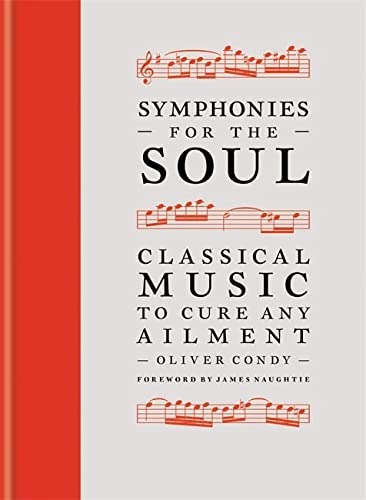
No problem; it enables me to consult his new book, Symphonies for the Soul, and find the perfect tonic to cure my grumpiness and restore my humour.Condy has taken on the role of musical physician, using his years of experience to prescribe remedies for all manner of ailments in the form of classical music and offer musical prescriptions that offer comfort, solace, and strength in the face of dark times.
His prescription? Listen to the third movement of Brahms' Symphony 3, which I duly do, and it works.
Eventually, when we catch up, I tell him how I had found solace in the Brahms, and we start chatting about all things music, especially how he pulled together a substantive playlist.
Image by Ioana Sasu from Pixabay
"This book was a chance for me to really look at the repertoire and go beneath the bonnet of western classical music to figure out what the pieces are that people wouldn’t necessarily think of turning to in different situations to treat those emotional elements.
"I am not going on about physical stuff here like dementia or treating migraines, although frankly, music does trigger amazing things in dementia sufferers.
"You trigger a memory, and suddenly you are taking someone back 50, 60, or 70 years, and the neurons start connecting, which is well proven. Music is an incredible enabler of those memories."
I can relate to that as I recount stories of how playing a certain hymn can evoke a strong sense of place, plus Beethoven’s Sixth Symphony instantly transports me to the school hall of my primary school, where our wonderful headmaster would play it in assembly.
Hymns, Condy says, are incredibly amazing. "There is something about hymns that is equal to mainstream classical music because it is about community, singing, and place."
Music is something we can turn to, and it will help us place ourselves, reposition, and decompress
Feeling we are in danger of digressing, I steer the conversation back to Symphonies for the Soul to learn more about the fortuitous events that led Condy to write a book that is the perfect antidote to how we might be feeling. He tells me that, like a number of us, he had always wanted to write something about music, but there are a plethora of music books already out there, so it was serendipitous when the publisher Octopus approached him towards the end of the second lockdown with the germ of an idea.
"I was on my own in my house in Bristol, and it was pretty miserable working remotely on the BBC Music Magazine. It is normally a collaborative process where the team gets together, crowds around computer screens, sorts headlines and captions, and looks for front cover images.
"Suddenly, like everyone else, we were on our own, individually feeling the isolation."
After Octopus suggested the idea, it began to make sense to write about how classical music can heal, especially after a scarring period like the COVID pandemic. There are a lot of people who feel slightly adrift, especially university students, and Condy believes we will feel the effects of the pandemic lockdowns for some time.
"Music is something we can turn to, and it will help us place ourselves, reposition, and decompress. And so it grew from there. The more I explored, the more I came up with emotions and pieces of music to fit them. Sometimes they come naturally. For moodiness, I chose Mendelssohn’s Italian Symphony, and I challenge anyone not to be buoyed up by that piece.
"If you feel lonely, try Elgar’s Enigma Variations, portraits of his friends within. Wonderful friends. Elgar suffered from a huge lack of self-confidence and was far from being the social butterfly we thought he was.
"Listen to Nimrod, which is a letter of gratitude to his publisher, who helped him through depression. Jaeger encouraged him to continue publishing. It is not a dirge, but primarily a generous big hug of a piece."
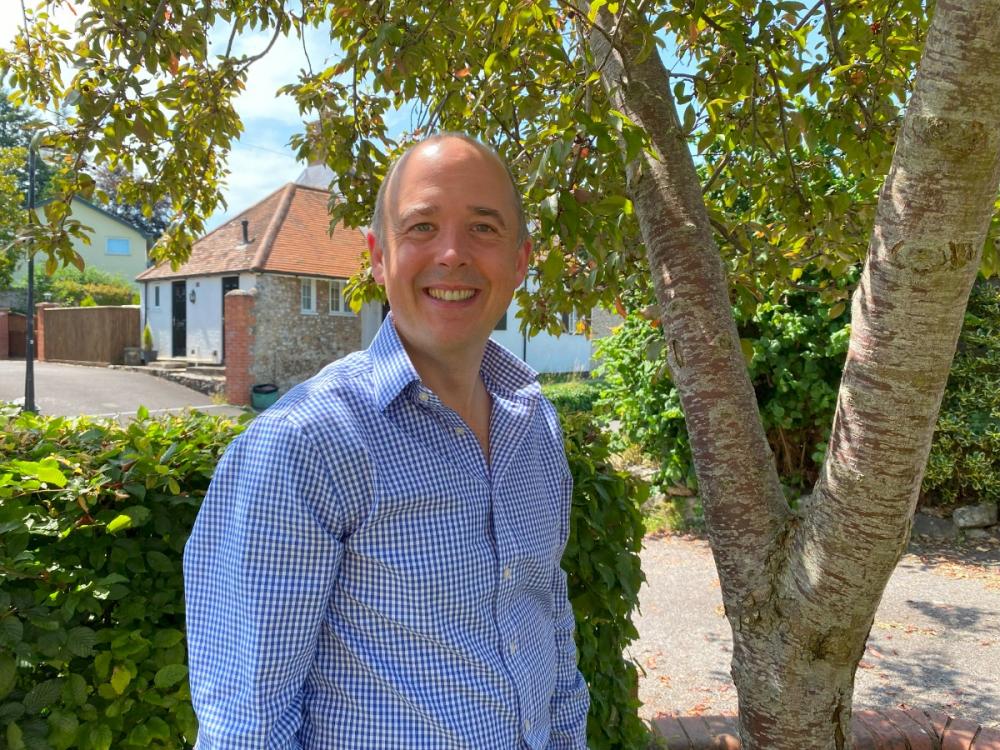
Oliver Condy
"The Bach Chaconne, Partita No 2 for Violin , written very soon after Bach learned of the death of his wife, who was healthy when he went away to inspect an organ, fell ill, died, and was buried by the time he got back.
It might be apocryphal and spurious, but it is thought he wrote it in that state of anguish and bewilderment. It has that heartbeat, almost stuttering, and a sense of time marching on.
"Measuring out one’s time in music like a metronome, not a funeral march, but a rhythm that carries it forward with a reassuring forward thrust to it."
"Music is a great leveller." It doesn’t matter what genre you listen to; music is a great healer and companion. It can be exciting and thrilling - an accompaniment to your life.
"Music is ingrained in us; it is in our DNA. We are musical beasts that have been making music for thousands of years. The earliest instruments were old bone flutes. Polyphony has been in existence for 800 years.
"Think how music has been knitted into our lives. It is often used in protest songs and football chants. At its basic level, it expresses stuff we can't do simply by speaking or shouting.
"Choirs and choral societies give us a sense of community and social cohesion, a sense of feeling better.
It is fascinating to hear how Condy put the book together, and it is even more impressive that it was all completed in under six months. I suggest it must have been hard coming up with a repertoire to cover such a gamut of emotions.
A sentiment with which he concurs. "Some of them were difficult. How do you work out a piece to deal with frustration?
"It was a really big journey to find a piece to represent the feeling. I had never really thought about it before, but Beethoven’s Grosse fuge, which was the final movement of the String Quartet No. 13 and then became a standalone piece in its own right, seemed like an idea.
Measuring out one’s time in music like a metronome...
There was a kerfuffle after its premiere and it is the work of a man in a state of extreme frustration, extremely deaf, wanting to express things that music at the time wasn’t allowing him to express. Stravinsky said it was a modern piece that would remain forever modern. Even today, it sounds weird and wacky. It was almost the perfect fit, which surprised me as I had never thought of it in that way before."I pick on a couple of other emotions. How on earth do you express hesitancy?
For Condy, it was turning his mind to silence in music. Thinking about a beat is where a composer takes a moment to think.
"Many composers do that, Andrew. Think of Haydn in the Creation at the ‘let there be light’ moment and the gap between the second and last movements of Rachmaninov’s second piano concerto.
"Baber’s Adagio has the most sublime pause after that massive climax before he lets the melody disappear into the ether.
We need someone at the top who was schooled in music and who genuinely loves music to give it a bit more life and priority
Of course, silence is about hesitating and not filling the space all the time. Something we can all learn from in today’s frenetic social media world.Not wanting to wrongfoot myself, I diplomatically find a way to broach the thorny subject that the demise of classical music is nigh and cite recent news reports about Arts Council cuts and the reaction to the decision to disband the BBC Singers, which was, thankfully, overturned.
Condy,ever the pragmatist, refers to music being seen as a non-essential subject, deemed not to be important, and he is quick to point out that, of course, English and maths are important, but so are the humanising subjects.
Once again, he comments on the significance of the pandemic years and how, as a nation, we turned to music.
"What about the music at the Coronation or at HM Queen Elizabeth's funeral? Where would we have been without the miraculous musicians both in the Abbey and St. George’s Windsor performing under difficult circumstances, not forgetting the quartet of singers at Prince Philip’s funeral who did the most incredible job?"
cq[Music is a great leveller." It doesn’t matter what genre you listen to; music is a great healer and companion]
Like me, Condy doesn’t understand why classical music is seen as elitist. He proffers the idea that it could be because people view the Last Night of the Proms or Glyndebourne as snobby. That idea is far removed from society.
"We need someone at the top who was schooled in music and who genuinely loves music to give it a bit more life and priority. Think of your primary school headmaster.
"Gareth Malone showed how effective music is. The Choir was a powerful programme that brought people together to make music they thought they could not make."
Who knew that Percy Grainger, of English Country Garden fame, was into S&M?
As we leaf through the book, there are so many interesting facts and anecdotes. Wonderful titbits of information, so much so that I am surprised he managed to do all the research and get the book published so quickly."As editor of BBC Music Magazine, I had the resources, knowledge, and a wealth of anecdotes. That is how we would bring a composer and their music alive.
"You try to present them in the most human way possible. The story behind Handel’s Messiah and how he left a copy to the Founding Hospital in his will was an exceptional act of kindness. Once you know the story, listen to the Messiah, and your perception of the piece may have changed.
"The music doesn’t have to reflect the emotion, but there is a story behind it that may encourage you to think. Rachmaninov getting over failure, for example. Then, for deception, read about the truth behind Albinoni's famous Adagio in G minor.
"Who knew that Percy Grainger, of English Country Garden fame, was into S&M?
"As for embarrassment, turn to Peter Warlock, who, along with E. J. Morean, played host to the crème de la crème of badly behaved British composing talent, including Constant Lambert and William Walton. The good folk of Eynsford (a village with access to over 70 surrounding pubs) might have been a little more forgiving had the composers kept themselves to themselves. However, Warlock had the rather peculiar and, it has to be said, embarrassing habit of riding his motorbike through the main street of the village completely naked.
"And of course, there are scientific studies that prove how music can soothe anxiety. Nothing startling more aesthetically beautiful, with a steady beat, an unchanging key, a pleasing melody, and a certain tempo, can bring down blood pressure."
The book is a delight, and I could stay all afternoon listening to Condy weave an entertaining narrative and continue swapping stories. It is certainly uplifting, but Condy, who is talking to an audience later, has to go and prepare and swat up on the fabulous minutiae. But before he does, I need to know what music he will be putting on in his hotel room in preparation for meeting his audience.
"Oh, the final movement of Brahms’ Second Piano Concerto, which will lead me to a gentle, happy place. It is beautiful, it sparkles, and it is funny. I love virtuosic piano playing. If I could play one concerto, it would be Brahams 2, but ask me tomorrow as it will probably be something different."
Symphonies for the Soul: Classical music to cure any ailment by Oliver Condy is published by Cassell