

Steve Whitaker, Features Writer
Poem Of The Week: From 'Mac Flecknoe' By John Dryden (1631-1700)
From ‘Mac Flecknoe’
All human things are subject to decay,
And, when Fate summons, monarchs must obey:
This Flecknoe found, who, like Augustus, young
Was call'd to empire, and had govern'd long:
In prose and verse, was own'd, without dispute
Through all the realms of Non-sense, absolute.
This aged prince now flourishing in peace,
And blest with issue of a large increase,
Worn out with business, did at length debate
To settle the succession of the State:
And pond'ring which of all his sons was fit
To reign, and wage immortal war with wit;
Cry'd, 'tis resolv'd; for nature pleads that he
Should only rule, who most resembles me:
Shadwell alone my perfect image bears,
Mature in dullness from his tender years.
Shadwell alone, of all my sons, is he
Who stands confirm'd in full stupidity.
The rest to some faint meaning make pretence,
But Shadwell never deviates into sense.
Some beams of wit on other souls may fall,
Strike through and make a lucid interval;
But Shadwell's genuine night admits no ray,
His rising fogs prevail upon the day:
Besides his goodly fabric fills the eye,
And seems design'd for thoughtless majesty:
Thoughtless as monarch oaks, that shade the plain.
All human things are subject to decay,
And, when Fate summons, monarchs must obey:
This Flecknoe found, who, like Augustus, young
Was call'd to empire, and had govern'd long:
In prose and verse, was own'd, without dispute
Through all the realms of Non-sense, absolute.
This aged prince now flourishing in peace,
And blest with issue of a large increase,
Worn out with business, did at length debate
To settle the succession of the State:
And pond'ring which of all his sons was fit
To reign, and wage immortal war with wit;
Cry'd, 'tis resolv'd; for nature pleads that he
Should only rule, who most resembles me:
Shadwell alone my perfect image bears,
Mature in dullness from his tender years.
Shadwell alone, of all my sons, is he
Who stands confirm'd in full stupidity.
The rest to some faint meaning make pretence,
But Shadwell never deviates into sense.
Some beams of wit on other souls may fall,
Strike through and make a lucid interval;
But Shadwell's genuine night admits no ray,
His rising fogs prevail upon the day:
Besides his goodly fabric fills the eye,
And seems design'd for thoughtless majesty:
Thoughtless as monarch oaks, that shade the plain.
Exquisitely adjusted to the work of poetic cynicism, the use of mock-heroic couplets prodigiously inflates a balloon of conceit before exploding it with the iteration of barbed witticisms. Investing another poet of the period, Richard Flecknoe, with the doting qualities of a kingly figure who has basked too long in the reflected glory of adipose assurance, Dryden picks relentlessly at his prey. And to devastating effect, for Flecknoe, whom Dryden held to be insipid, is the master of a universe of one, aggrandized, here, to imperial proportions. But his authority is unassailable only in the realm of ‘Non-sense’; his antagonist’s play on the word ‘absolute’ exalts as it condemns.
Dryden’s fixity of purpose is inscribed in a procession of formal iambics: the stately pace of the poem is in keeping with the ‘solemn’ nature of the ‘ruler’s’ judgment as to succession. And with forensic acuity, the poet measures Flecknoe’s preponderance of shortcomings by the yardstick of the latter’s astonishing lack of self-knowledge. Surprised by the virtue of his own insight, Flecknoe is moved to cry ‘tis resolv’d; for nature pleads that he / Should only rule, who most resembles me’.
Dryden’s brilliant metaphorical devices reduce the ‘heir’ to an enfeebled cypher whose empty-headedness befogs the daylight hours. A facsimile of the king in the realm of stupidity, Shadwell is skewered in one caustic couplet:
‘The rest to some faint meaning make pretence,
But Shadwell never deviates into sense’.
We are direct heirs to the satirical traditions of the Enlightenment, and increasingly egregious social and political landscapes demand no less than sharp and frequent correctives. One wonders what Dryden, Pope or Hogarth would have made of the Teflon buffoon in no.10, more still the ‘Shadwell’ who takes his place when, and if, the mud finally sticks.
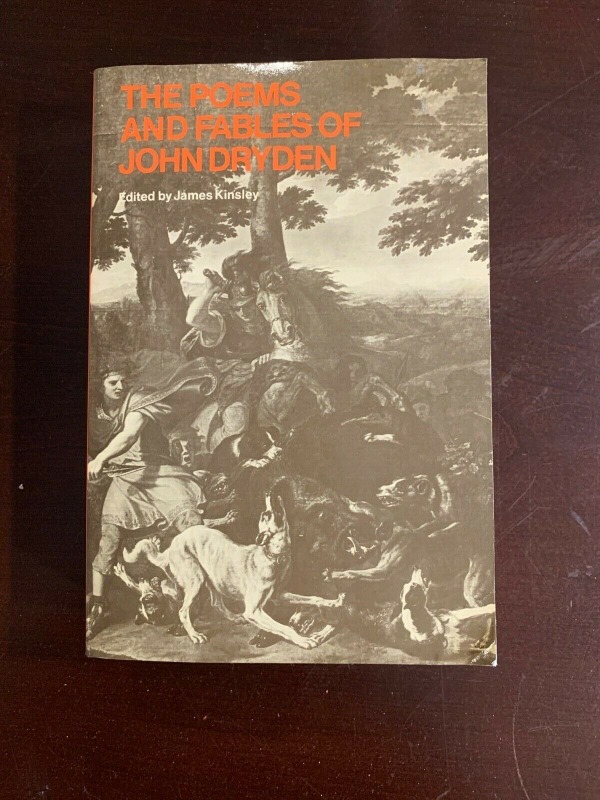
The opening excerpt of 'Mac Flecknoe' is taken from The Poems and Fables of John Dryden, published by the Oxford University Press (1980)