

Jeremy Williams, Arts Correspondent
In Conversation: Minute Taker
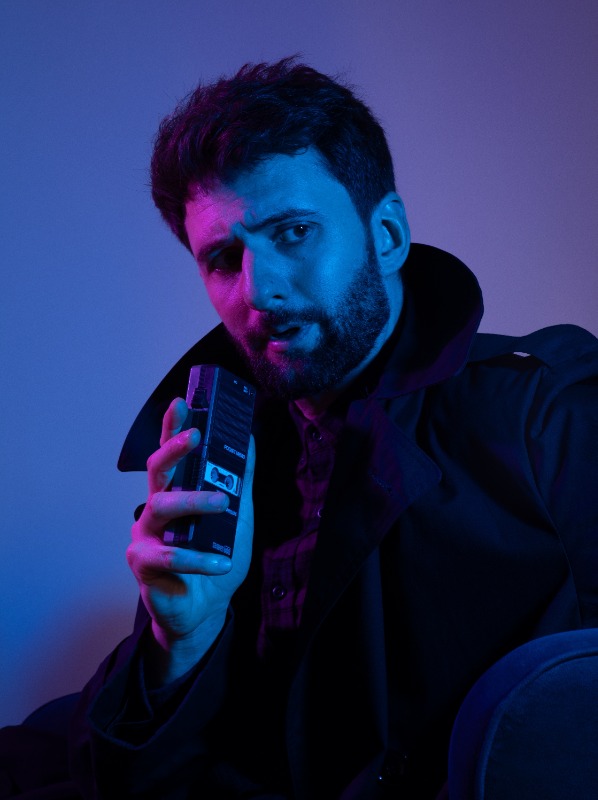
Detective: Minute Taker
Photo: Malc Stone
To be honest, I try not to overthink the creative process. The songs just kind of come out when they’re ready. I hear them in dreams, or they pop into my mind first thing in the morning as I wake up—probably the only time of the day when there’s space for ideas to come through before my mind gets too busy. I don’t write very often. Maybe a couple of weeks of the year. They all just kind of pop out during those periods, and I do my best to get them down and develop them further. So these stories were just ready to be told.
You’ve said the album reflects a turbulent and self-destructive period in your life. Was writing it cathartic, or did revisiting that time feel difficult?
It wasn’t so much a case of revisiting it. When I wrote it, I was deeply immersed in it, and I still occasionally revisit those emotional states. I guess these things are cyclical. I quite often find myself going through the same behaviour patterns, relearning the same “conclusions”, haha. I guess the difference is that as I get older I become more aware of that, and I think that in itself is the first step to breaking cycles.
I find writing songs a very cathartic process, so that side of it wasn’t difficult. I always get a bit of a buzz out of making these songs that come from difficult thoughts or experiences. It’s like making light out of the darkness. And it gives those experiences purpose to know that they have inspired a song that hopefully others will be able to relate to and connect with.
There’s a strong theme of escapism running throughout the record. What forms of escapism were you personally drawn to while making this album?
Drinking was definitely a big factor. My relationship with alcohol became a bit unhealthy at times, and I’d disappear into the night on these long binges looking for thrills and adventure.
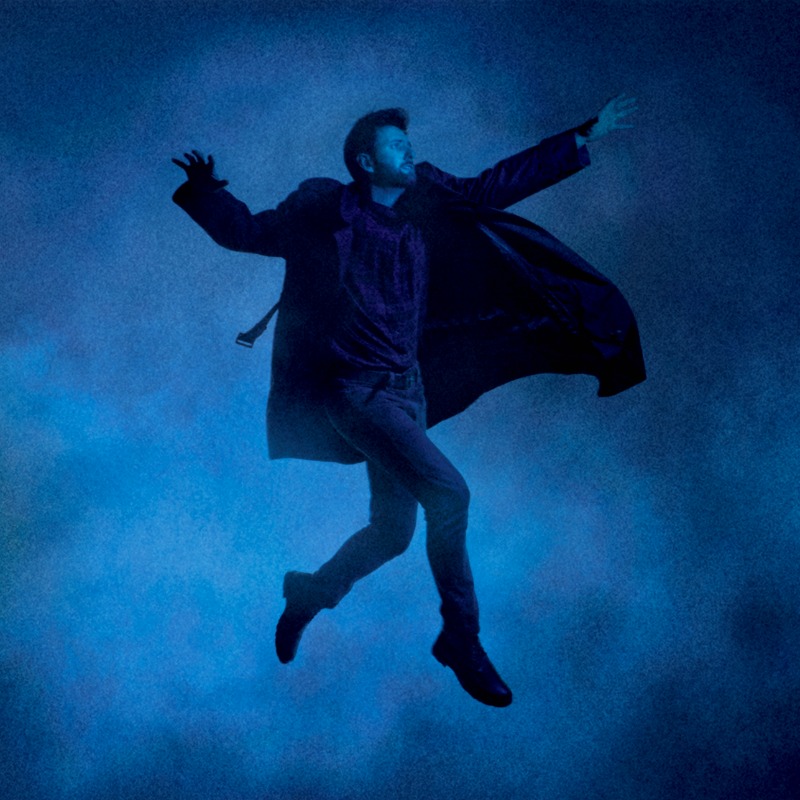
Surrender ot the Night: Minute Taker
Photo: Malc Stone
80s music in general is a big form of escapism for me. Artists like Kate Bush, Pet Shop Boys, Erasure, Eurythmics and A-ha. It all brings me so much joy; whether I’m dancing round the house or walking out in the countryside, it feels cosy and nostalgic and takes me back to simpler times when I was a kid.
I also drew a lot of inspiration from movies from that era. I love just disappearing into their cinematic worlds. And I watch a lot of space documentaries when I go to bed at night. They give me a strange sense of comfort by reminding me of just how incomprehensibly tiny our entire world is in the grand scheme of things. All of those forms of escapism definitely found their way into the songs and visuals for the album.
The album feels very cinematic, with influences like Blade Runner, The Lost Boys, and The Terminator. How did these films shape the sonic and emotional world of The Oblivion?
The worlds of those films are all so seductive and atmospheric. Creatively, I find myself drawn to their blend of beauty, danger, and melancholy. Blade Runner has that feeling of longing set against this retro-futuristic world of artificial beings and humans. The Lost Boys have this seductive nocturnal glamour and youthful recklessness. The Terminator has this looming sense of impending doom. I think they all, in their own way, feel quite relevant to me in the world today, and those emotional textures found their way into the music, artwork, and videos. I wanted the album to feel like stepping into some half-remembered retro-futuristic dream world of misty night streets and neon lights.
Compared to Wolf Hours, this album feels bigger and more immersive. In what ways do you feel you’ve evolved sonically and creatively since your last record?
With Wolf Hours, I was establishing this 80s-inspired synthpop sound for the first time, which was quite different to what I’d done previously. Before that, my music often leant more towards experimental pop. My degree was actually in contemporary music, so I came from quite an experimental background. With The Oblivion, I felt more confident bringing some of those more abstract sensibilities back into the music.
I started experimenting more with unconventional song structures, atmospheric sound design, and retro film scoring influences from artists like John Carpenter, Vangelis, Giorgio Moroder, and Klaus Doldinger. I wanted the album to feel less like a collection of individual songs and more like stepping into a complete cinematic universe.
A big evolution creatively was also the visual side. I became much more focused on creating cohesion across everything: music, artwork, press photos and music videos. Because I designed all of the artwork myself, it allowed all of the different elements to help form the overall world of the album.
.jpeg)
You recorded and produced The Oblivion, from your home studio on the moors outside Manchester. How did that environment influence the mood and atmosphere of the album?
I spend a lot of time out walking. In the daytime I go out onto the moors and into the woods. At night I wander around my town when no one is around, when it’s so peaceful and still. I feel like I’m the only person in the world. I love listening to retro synth music and watching the trees and houses materialise in front of me as I wander. It all feels so cinematic, like I’m in some atmospheric film noir. It makes me feel a sense of connection to both my core self and my past. Those walks became a big source of inspiration for the mood of the album. Particularly the closing track Alone, which is very much about finding peace and connection in solitude. I’d often go home afterwards with new lyric ideas and have a late-night recording session, trying not to wake the neighbours.
Spoken-word fragments recorded onto dictaphones and tape machines appear throughout the record. What inspired you to include these more intimate, fragmented moments?
One of the songs, The Highway, was written after watching Tina Turner’s documentary Tina, which was released in 2021, a couple of years before her death. I’ve always been a huge fan of hers and have the utmost respect for the way she escaped the domestic abuse she suffered at the hands of Ike and then later revitalised her career in her mid-40s against all odds.
She spoke about discovering Buddhism and how chanting gave her the inner strength she needed to finally leave him. In the mid-1970s, after an altercation with Ike, she ran across a busy highway towards a motel. With trucks racing towards her, she didn’t know if she was going to make it, but she knew this was her chance. It was the day before Independence Day.
That story inspired me to write a song from her perspective in that exact moment. We’ve all experienced pivotal moments in life where we’re forced to choose between remaining in darkness or stepping into the unknown in the hope of finding light.
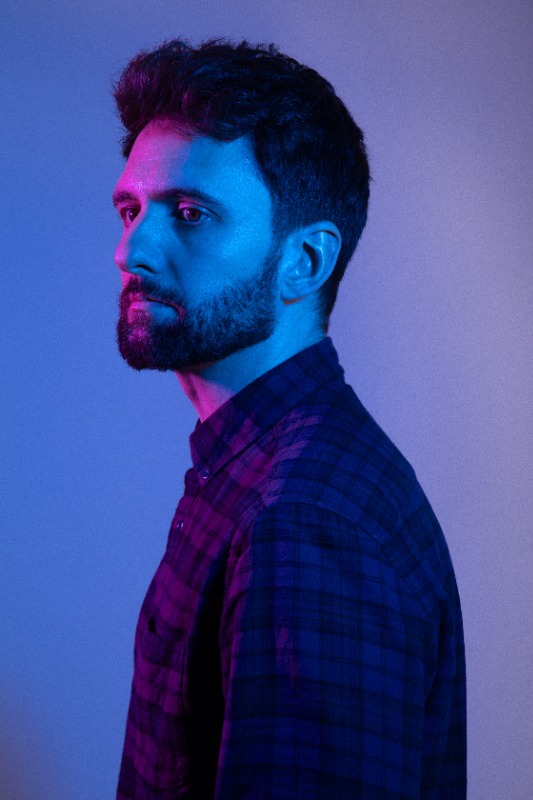
Minute Taker
Photo: Malc Stone
That idea then found its way into other songs on the album. The songs are all written from the perspectives of different characters, all extensions of myself to varying degrees, and these tape fragments became a way of conveying their internal monologues.
The tapes also felt like a natural addition because when I was younger I used to carry dictaphones around in my pocket to capture song ideas whenever they occurred to me. I also love the grainy, distorted texture and retro sensibility they brought to the album. I used my original old tape recorders throughout the process, and they were often warping, slowing down, and malfunctioning, but all of those imperfections became part of the sound, and I had a lot of fun experimenting with their quirks.
Addiction and self-control are central themes here. How consciously did you want listeners to engage with those struggles versus interpreting the songs through their lens?
Well, my instinct is always to try and convey emotions honestly and concisely in the hope that they’ll connect with those feelings in other people. But I also love the fact that listeners bring their own interpretations to songs, even when those interpretations are entirely different from my original intention. Over the years I’ve often felt like artists were singing about something I was going through or had been through, only to later discover the song was actually about something different entirely. That’s the beauty of art. It connects with us in all different ways depending on our experiences.
Recent singles like Surrender to the Night and Losing Self-Control introduced the album’s themes early. How did you choose which songs would act as the first doorway into this world?
Well, when I’m writing an album, there are usually certain tracks that stand out as the singles. Often when I show songs to people along the way, their reactions help decide that too, and those two tracks were prime candidates in that respect, so I chose to make music videos for them along with my personal favourite, Alone.
I think Surrender to the Night felt like the perfect opener for the album because it captures that seductive pull of the night. A theme that runs through the record. The song explores the theme of seeking escapism and euphoric adventures through drinking and going out, contrasting sharply with the album's closing track Alone, which simply expresses a sense of peace in the solitude of the night.
Losing Self-Control expands on that theme of order and chaos that runs through the album, and it’s quite a romantic song that connects with people on quite an immediate emotional level.
Losing Self-Control has clearly resonated with audiences, especially through its Orwellian, queer-themed video. Why was it important to tell that particular story visually?
That Orwellian sense of surveillance and control, particularly around LGBTQ+ lives, feels very relevant right now, and hopefully the video offers some sense of hope within that. It’s very important for me to show queer perspectives in my videos, especially in a story like this that explores repression and the pressure to suppress parts of yourself. The video places those themes within this retro-futuristic authoritarian workplace where desire itself feels dangerous but ultimately unstoppable. Visually, it allowed me to externalise the emotional themes of the song in a much larger way.
The Nocturnal Monologues film trilogy has become such a key part of this era. Did you always envision The Oblivion as a multimedia project, or did the visual universe grow organically?
I had it on my mind from quite early on that I wanted to create music videos for some of the songs. I quite often envision scenes when I’m developing music. I imagine characters and situations, and it’s always a thrill trying to bring those things to life through film.
In 2024, as I was coming towards the end of producing the album, Waterside in Manchester approached me about creating a 20-minute live show as the centrepiece of their Prism Festival. I thought it would be a good opportunity to make visuals for some of the songs, so that’s how the Nocturnal Monologues film came about. I worked with director Brett De Vos to create a narrative running through three of the album tracks with interlinking sequences.
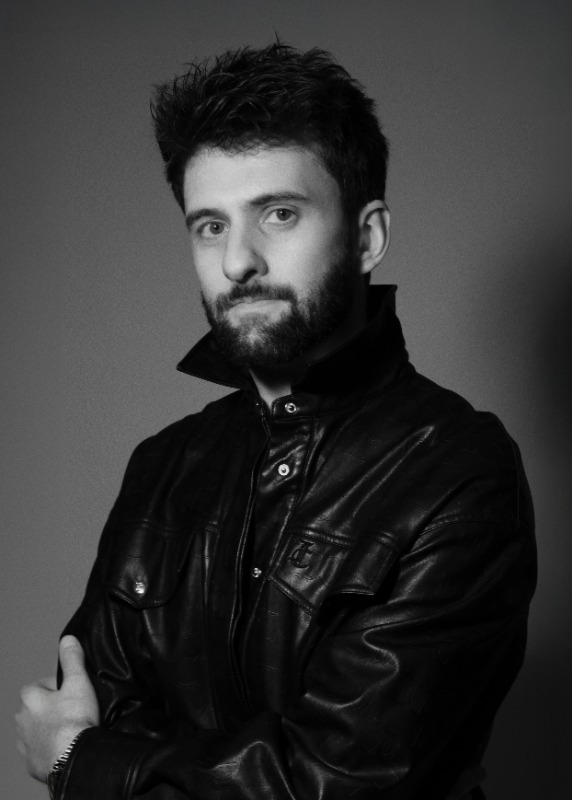
Losing Self-Control: Minute Taker
Photo: Malc Stone
Afterwards, when it came to the album artwork, I started experimenting with ideas in Photoshop using stills from the film and unexpectedly ended up creating all of the artwork myself. Normally I’ll come up with concepts and collaborate with other artists to develop them further, but this time it all came together very organically, and I wanted to fully realise the visual world in my own way. I felt there was a strong fusion between the music, videos and artwork, and I was keen to make sure that cohesion lasted through the entire project.
The focus track Alone feels like a moment of resolution after so much tension and chaos. Why did you want to end this chapter with stillness rather than drama?
The characters throughout the album are all searching for something from the night, whether that's escapism, euphoria or romance. But ‘Alone’ is about reaching a point where you no longer need those things to feel complete. It’s about finding peace in solitude and simply being present in the moment. Ending the album with stillness rather than drama felt powerful. The quiet realisation is that you already have everything you've needed all along.
You’ve built an impressive independent career through Secret Songs and direct-to-fan support. How has that independence changed the way you approach making and releasing music?
I’m not sure it’s really changed the way I create the music because I’ve always believed the art has to come first and then you work out how to promote it afterwards. If you do things the other way around, then it risks becoming something made to order rather than genuine creative expression.
It’s changed the way I release music in the sense that I now know what my fans like in terms of formats and specs. For example, I know they like gatefold sleeves and colourful vinyl editions. In fact I quite often ask them what they’d like so I don’t waste money on ordering merchandise that people aren’t interested in.
All of the music that doesn’t make it onto my main albums, whether that’s alternate versions, demos, covers or songs I ultimately decided against, now finds a home on a series of homemade albums released exclusively for my Secret Songs subscribers. Secret Songs is a subscription platform similar to Patreon where people can support my work and access albums, concert videos and other material that isn’t available elsewhere.
It’s become my biggest income stream and a really lovely way to share pieces that would otherwise just sit in my archives forever. People seem to genuinely appreciate that more personal approach and the opportunity to hear all the rare material from the cutting room floor.
Overall, being independent means I can make exactly the music I want to make without pressure from a label to conform to trends or expectations. It’s really meaningful to know that people genuinely connect with the music and want to follow my creative journey long-term. That relationship feels far more valuable and sustainable to me than chasing fleeting mainstream attention.
As an artist often exploring LGBTQ+ perspectives and emotional vulnerability, do you feel a responsibility to create spaces where listeners feel seen and understood?
Yeah, definitely. When I was growing up in the 1980s and 1990s, I was always longing to see representation in song lyrics and music videos from my favourite artists, but even the openly gay artists, of whom there were very few, rarely explored those perspectives directly. It made me feel more alone and at odds with my feelings.
I don’t blame those artists, of course. It was an entirely unique time politically and culturally. Thatcher’s “traditional moral values” and all that. Mainstream culture wasn’t really ready for that level of openness yet, and labels probably wouldn’t have supported it either. Those artists still made important strides for queer visibility in other ways.
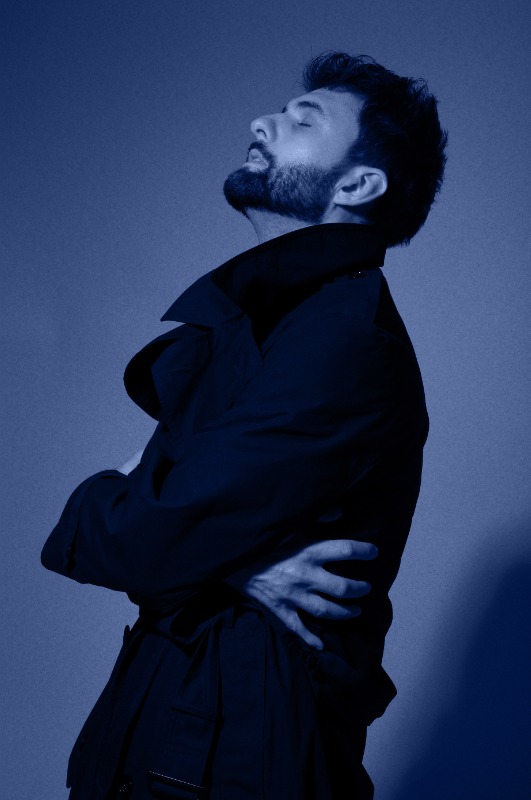
Surrender to the Night
Photo: Malc Stone
Whenever somebody messages me saying that a song or video resonated with their experiences and meant something to them, that means far more to me than numbers or algorithms ever could.
Now that The Oblivion is out in the world, what do you hope listeners take away from this journey through darkness, desire, collapse, and ultimately acceptance?
I hope people come away feeling less alone in whatever struggles or contradictions they carry within themselves. The album goes to some quite dark emotional places, but ultimately I think it’s about acceptance and creatively exploring those restless, self-destructive periods of life that many people experience at some point.
But above all else, I hope people simply enjoy disappearing into the synthy, cinematic world of the record. Imagining themselves wandering neon-soaked night streets inside some retro-futuristic dream.