

Jeremy Williams, Deputy Arts Editor
Chatting to Carminho
Despite still being only 38, Carminho is already widely considered as one of the all time great Fado singers; an artist whose eclectic work has roots in both traditional and contemporary Fado. The self-produced Portuguesa is Carminho’s sixth album and follows 2021’s acclaimed Maria, which achieved Platinum status in Portugal and cemented her reputation as one of the world’s leading proponents of traditional Fado. We caught up with her ahead of her upcoming London show to learn a little more.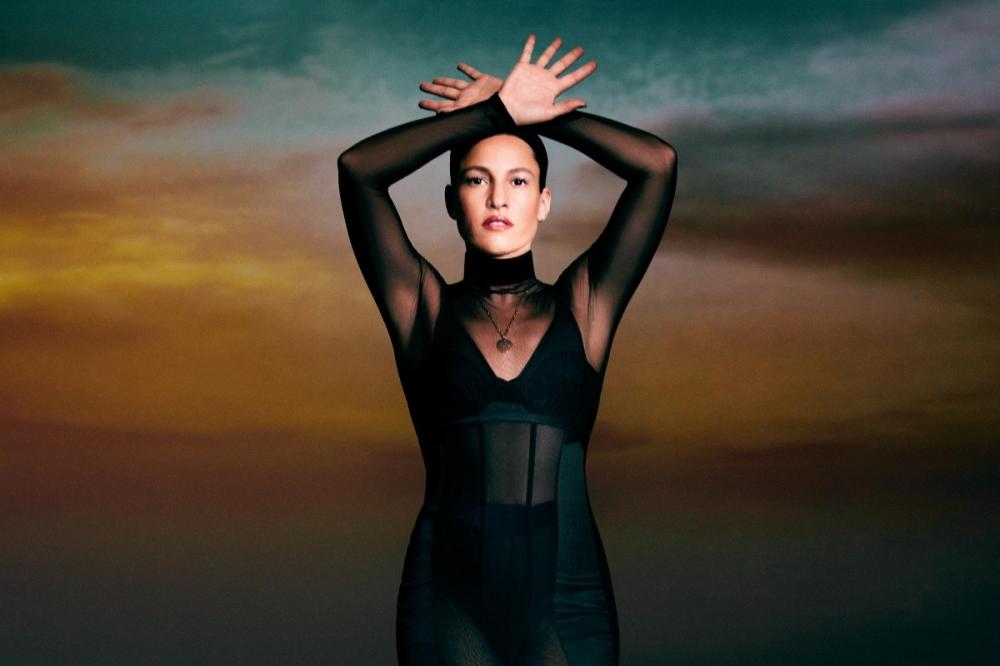
Hello, I’m fine. Thank you.
You have just released your sophomore album.
Tell us a little about Portuguesa?
Portuguesa is my last album and it's about the practicing of traditional Fado, exercising this culture, this genre daily. I’ve listened to Fado since I was born, my mother is a singer and I understood some rules and some techniques about building a repertoire, choosing poems, choosing the right song to the right lyrics, and there’s many possibilities and combinations with different musics, we can change the lyrics and build new traditional Fados; I was exercising this method of thinking about my repertoire and what the elders left me as a heritage and knowledge for me to deeply understand the tradition, and with it, enable me to be what I am in my own generation, in my own time.
Fado has been enjoying a higher profile on the international stage recently, what do you think has sparked the additional interest?
Yes, I think every opportunity that a genre or a culture has to expose itself and put it in the spotlight is an opportunity to know more about that culture and to love it more. I think the big change is there are more articles and accurate information about it as well as more people wanting to know exactly what Fado is.
There seems to be attention from the media and promoters plus more concerts and more artists having the opportunity to make their careers.
Your sound leans more into the tradition of Fado than some contemporaries who are modifying the sound of Fado. Who would you say are your inspirations?
I think that a culture and a genre so traditional as Fado has to be understood from inside out. My inspiration comes from the fadistas who made the genre and the ones who have changed it a bit in their time; there’s always some vanguardists in each time but I learn from them as they were born in the middle of the tradition, and I understood what the little gaps are and where you can go with some experimental and experiences. So, I try to do the same, | don’t believe in a culture who are just a memory exercise.
I think Fado is a live language and we must practise the language to develop it. So, you have to know deeply that language to speak but also be free and open to see where you can put your influences and your contemporaneity.
What drew you to Fado?
I think Fado has been with me since I was born. I'm not sure because my mother is a singer. I started listening since I was 0 and despite that, my parents never pushed me or my brothers to sing or to go in this direction. It was something that I was determined to go and do.
My brothers love to sing and love music but they have different professions, I was the only one who chose this path. I think it was the family environment that provided this passion, it was very free, natural and organic and we just sang as a family without pretensions.
Tell us a little about the creative process behind Portuguesa?
In this album I focused my work in building the repertoire inspired by the elders and doing different combinations with the music and the lyrics because in Fado, you can change it, mix and match and compose new compositions to old poems. So, I was working on that, I wrote lyrics to music from Alfredo Marceneiro, is the first music on the album “O Quarto” and opens the album with the reference to the elders and to the ones who made this language to progress. And then I also built traditional music with the traditional structure to a poem from Sophia de Mello Breyner.
I did both the music and lyrics to try to understand and to practice the composition of the traditional structure. I was deeply working on that, but I also invited some composers from my generation to give me some songs and compositions and, like in Fado from all times, it has influences from different kinds of music, marchas populares, the festivals of Lisbon and also the love songs of radio, so the fadista had a lot of different kind of compositions to build a repertoire. And I did the same in this album, trying to make a Fado album.
Did you feel any pressure with the sophomore, following the success of Maria?
I didn't feel pressure, I always feel sometimes a desert of creativity but that is normal for me, I felt the same on the last album, Maria and always when I'm in the process. But this album was not a pressure at all, it was a very peaceful process, with my musicians we just went to the studio in a 10-day artistic residence from 10am to 6pm, it was incredible because I just discovered the production and some of the songs by communicating with them. We were not doing it for an album we just wanted a pre-production, so in the middle of the residence I just discovered that the album was there, and we were actually making it.
So, the process was very beautiful with the musicians and the technicians as was discovering new sounds to serve the same purpose; another thing about this album is that I have the tradition trio and I think that each instrument serves the traditional Fado with a function so I started to listen to other sounds and textures but with the same ability to serve the song and to give that emotion and coherence that we looking for in Fado all the time.
Fado is not only a kind of music, but also a emotion that you get, a place that you achieve so for me was discovering that subtlety and delicacy way of calling different sounds and different textures to a place where we have to discover the real emotion in there.
You have a London show coming up, what have you got planned?
I’m very excited to come back to London and Union Chapel. It's a beautiful place and I’m sure that this concert is perfect for the venue because it's a place that instills such an emotion and respect for the music, and we can share that emotion in a Fado night. I just look for the communicating of energy between the audience and us. We are going to play Portuguesa and some F ados from other albums. But the principal thing is to get a warm and intimate moment between us.
If you could perform with one UK guest vocalist at the show, who would you choose?
This question is very difficult. But just for curiosity if I could choose anyone - Sade - because she transmits such an incredible emotion when she sings and it's so deep in how she makes me feel that I would love to see what it would be like performing with her and the voices together
Carminho’s latest album Portuguesa is out now and performs at the Union Chapel in London on 12 May.