

Andrew Palmer, Group Editor
Classical Music: MacDowell Volume 2
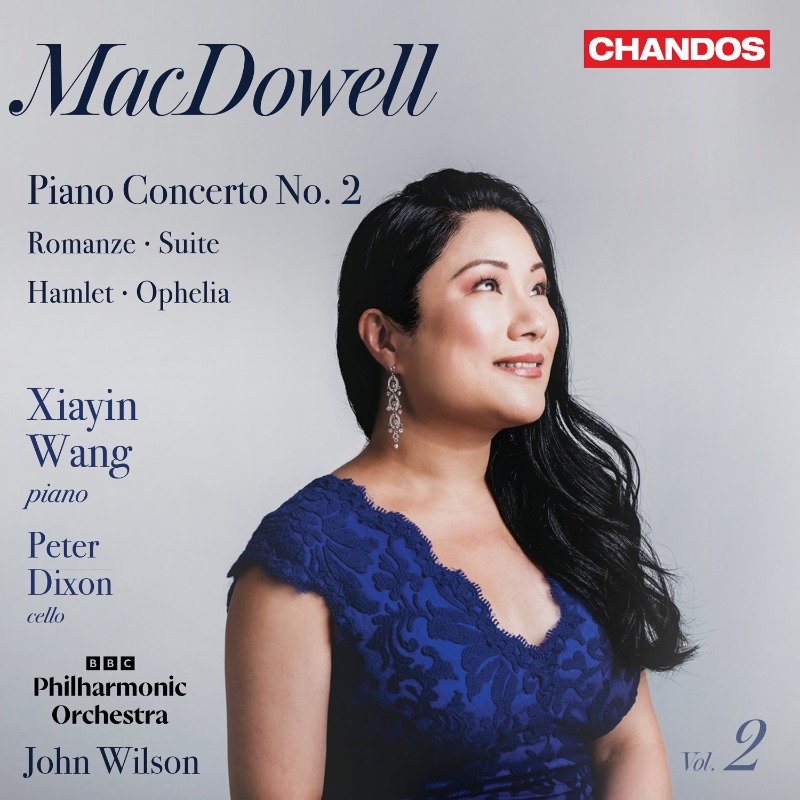
Piano Concerto No. 2 in D minor, Op. 23; Hamlet | Ophelia, Op. 22; Romanze in E minor, Op. 35; Suite (No.1) in A minor, Op. 42
Xiayin Wang (piano), Peter Dixon (cello) BBC Philharmonic/John Wilson
Chandos CHAN20332 chandos.net
The disc opens with Hamlet and Ophelia, played beautifully by the BBC Philharmonic with particularly lovely contributions from the strings. As Mervyn Cooke points out in his excellent liner notes, at this early stage in his career, MacDowell was absorbed by the symphonic poem—under the strong influence of Franz Liszt. During their 1884 honeymoon in England, the young composer and his wife, Marian, were captivated by Shakespeare productions at London's Lyceum Theatre, and MacDowell immediately began sketching a series of such pieces inspired by the characters he had seen, though he completed only two of the projected six.
It begins quietly and reflectively before the sound is punctuated with a piano solo, after which the orchestra re-enters and the soloist and ensemble merge in a delightful first movement. Xiayin Wang's prowess is energetic when needed and controlled in the lovely quiet sections, where the warmth of her playing shows real understanding and works beautifully with Wilson and the BBC Philharmonic.
MacDowell's writing demonstrates considerable skill in how he deploys the different orchestral sections, and the movement ends as wonderfully as it began. The second movement, a presto, challenges Wang, showcasing her virtuosic adeptness throughout.
The architecture of the largo third movement again reflects the opening: a slow, rather fervent beginning before building with wonderful brass and pianistic runs towards an exciting climax. MacDowell's orchestral brilliance is on display in the way the dynamics shape the piece.
Peter Dixon joins the BBC Philharmonic for a delightful four-minute Romanze for Cello and Orchestra, written at Wiesbaden in 1887 and dedicated to the Bohemian virtuoso David Popper. Dixon's cello sings beautifully, capturing the spirit of this charming work.
Closing the album is MacDowell's First Orchestral Suite, composed after the couple's move to Boston and reflecting his lifelong love of nature. The suite comprises five short pieces: In a Haunted Forest, Summer Idyll, In October, The Shepherdess' Song, and Forest Spirits. MacDowell uses the orchestra well throughout. The opening begins enigmatically – one can imagine walking through the forest, glancing furtively from side to side and hurrying along. There is a build-up in intensity before an escape is made, and the gentle low tones of the opening return. The remaining movements are equally attractive, with gentle tunes for strings and woodwind deployed with real effectiveness, the orchestra is controlled and beautifully balanced.
The result is music-making that places MacDowell firmly in the pantheon of late-Romantic orchestral composers.